


Blind Test: AKASO 360 vs Fujifilm X-E5 – Which Is Actually Better?
AKASO 360 vs Fujifilm X-E5: verified specs, pros and cons, and which camera suits action, vlogging or photography, plus prices and alternatives.
Quick take: I put the AKASO 360 vs Fujifilm X-E5 through a "blind test" of output, judging each camera by what it actually produces and not its spec sheet. The AKASO 360 wins for hands-free action, motorcycle and solo-vlogging footage you can reframe later. The Fujifilm X-E5 wins for stills, color and anything you'd print. They cost wildly different amounts and solve different problems, so the right answer depends on the story you want to tell.
These two cameras come from opposite philosophies. One is a 360-degree action camera that captures everything around you. The other is a disciplined, rangefinder-style mirrorless camera built around color science and interchangeable lenses. Both regularly turn up on the same shortlist, because buyers ask the same question: which one should I spend my camera budget on? The blind test here is a judgment of results, not a lab test. I asked which footage or photo I would rather show someone, for a given job.
AKASO 360 vs Fujifilm X-E5: Key Specs Side by Side
I've checked every number below against AKASO's and Fujifilm's own spec pages and against independent reviews.
| Feature | AKASO 360 | Fujifilm X-E5 |
|---|---|---|
| Sensor | Dual 1/2" 48MP CMOS | 40.2MP APS-C X-Trans CMOS 5 HR |
| Max video | 5.7K/30fps 360°, 4K/60fps 360°, 2.8K/60fps single-lens | 6.2K/30p, 4K/60p 10-bit 4:2:2, 1080p/240 |
| Photos | 72MP or 18MP 360° (JPG, JPG+DNG) | 40.2MP stills, RAW |
| Stabilization | Gyro-based electronic stabilization (SuperSmooth), 360° Horizon Lock | 5-axis IBIS, up to 7 stops (CIPA) |
| Field of view | Full 360° sphere, reframed later | Depends on the lens (X-mount) |
| Weather resistance | Weatherproof/splash-resistant, not for submersion | No weather sealing |
| Battery | 1350mAh, rated about 60 min at 5.7K/30 | About 400 shots per charge (CIPA, per TechRadar) |
| Weight | 180 g | About 445 g body only |
| Audio | Dual mics with windshield design | Built-in mics plus 3.5mm mic input |
| Typical price | From about $199.99 (Standard Combo) | $1,699 body, $1,899 with XF23mm f/2.8 kit |
The AKASO 360: Shoot First, Point Later
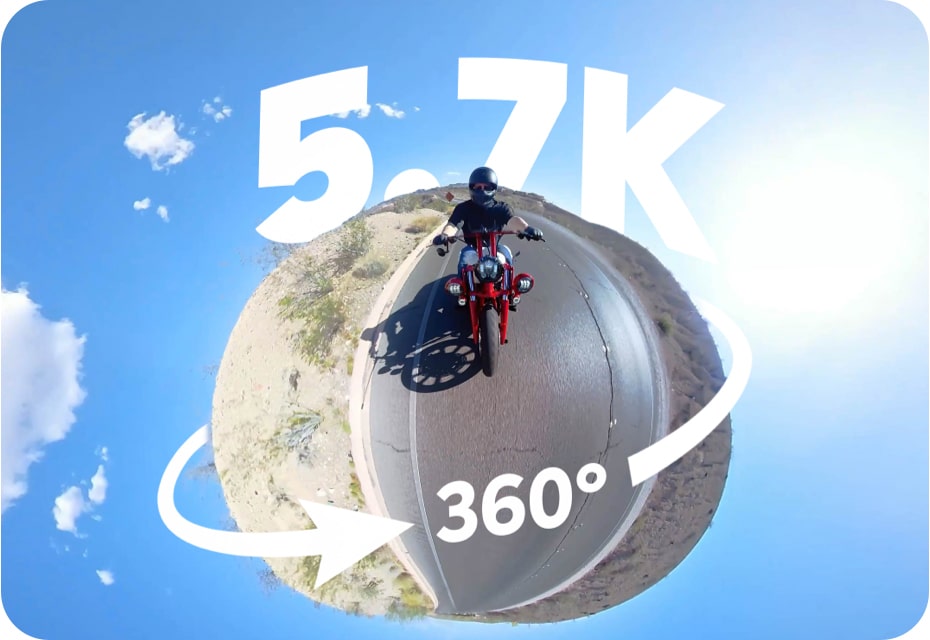
The AKASO 360 uses two fisheye lenses, each in front of a 1/2-inch 48MP sensor, and stitches their output into a full sphere. Its headline mode is 5.7K at 30fps. That resolution matters more than it sounds, because the pixels are spread across the whole sphere. When you reframe the footage into a normal flat video, you're cropping a slice of that sphere, so the result looks more like good HD than true 5.7K. If you want smoother motion, the camera also records 360° 4K at 60fps.
For motorcycle and other hands-free use, this is where it shines. Because the camera records everything, it effectively acts as its own gimbal. AKASO's 360° Horizon Lock keeps the horizon level however the camera rotates, and the in-app SuperSmooth stabilization irons out vibration. Visordown tested the Motorcycle Combo on track and reported that horizon lock and stabilization stayed smooth during aggressive riding.
The invisible selfie stick effect is the other big draw. The stick sits in the stitch zone between the two lenses, and the software removes it, which gives you a floating, drone-like third-person view. The Motorcycle Combo this article links to includes an invisible selfie stick and two batteries. Visordown's UK bundle also came with a 128GB microSD card, mounting clamps and a rubber lens protector, but check the listing for the exact contents in your region.
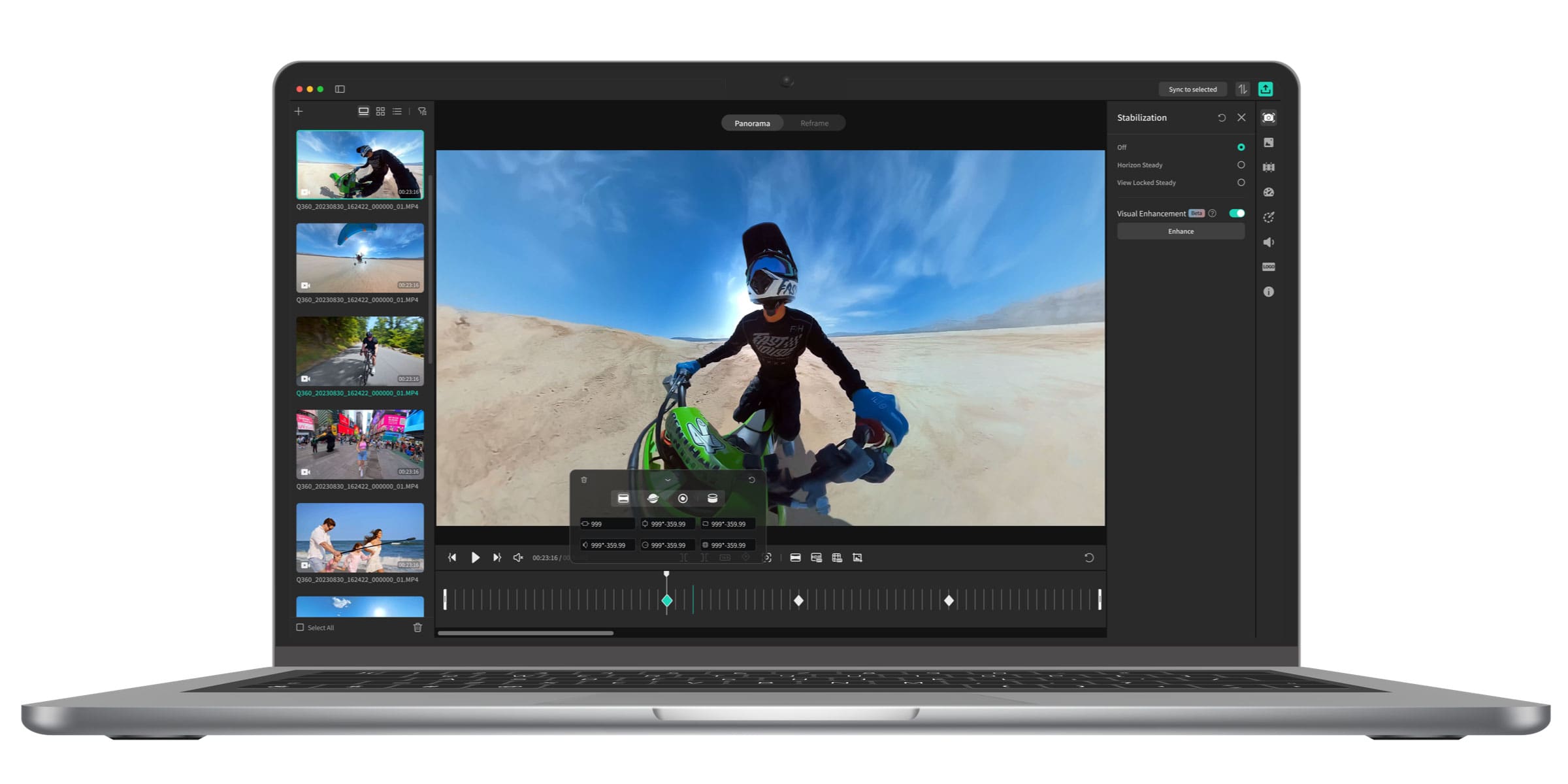
The free AKASO 360 app handles reframing, and you don't need to register to use it. You can set keyframes by hand or let AI Subject Tracking keep a person centered. TechRadar also found the desktop editing app simple and intuitive.
AKASO 360 pros and cons
Pros
- Total framing freedom: you reframe in post, so you never miss a moment because the camera was pointed the wrong way.
- Excellent stabilization and horizon lock, praised by both TechRadar and Visordown.
- Invisible selfie stick effect for third-person, drone-style shots.
- Light and compact at 180 g, with a 2.29" touchscreen and a standard 1/4" mount.
- Very good value: the Standard Combo launched at $199.99.
Cons
- Weak in low light: the small sensors get noisy and lose shadow detail once you're out of bright sun.
- Not waterproof or rugged: it's weatherproof for rain and splashes, but it's not meant to go underwater.
- Lens vulnerability: the bulging lenses scratch easily, and unlike on the Insta360 X5, you can't replace the glass yourself.
- Wind noise at speed: Visordown found the audio unusable above about 40mph.
- More post-processing: you need to reframe 360 footage before you can share it.
- Stitching isn't always invisible: reviewers have spotted a seam between the lenses in some shots.
The Fujifilm X-E5: The Purist's Choice
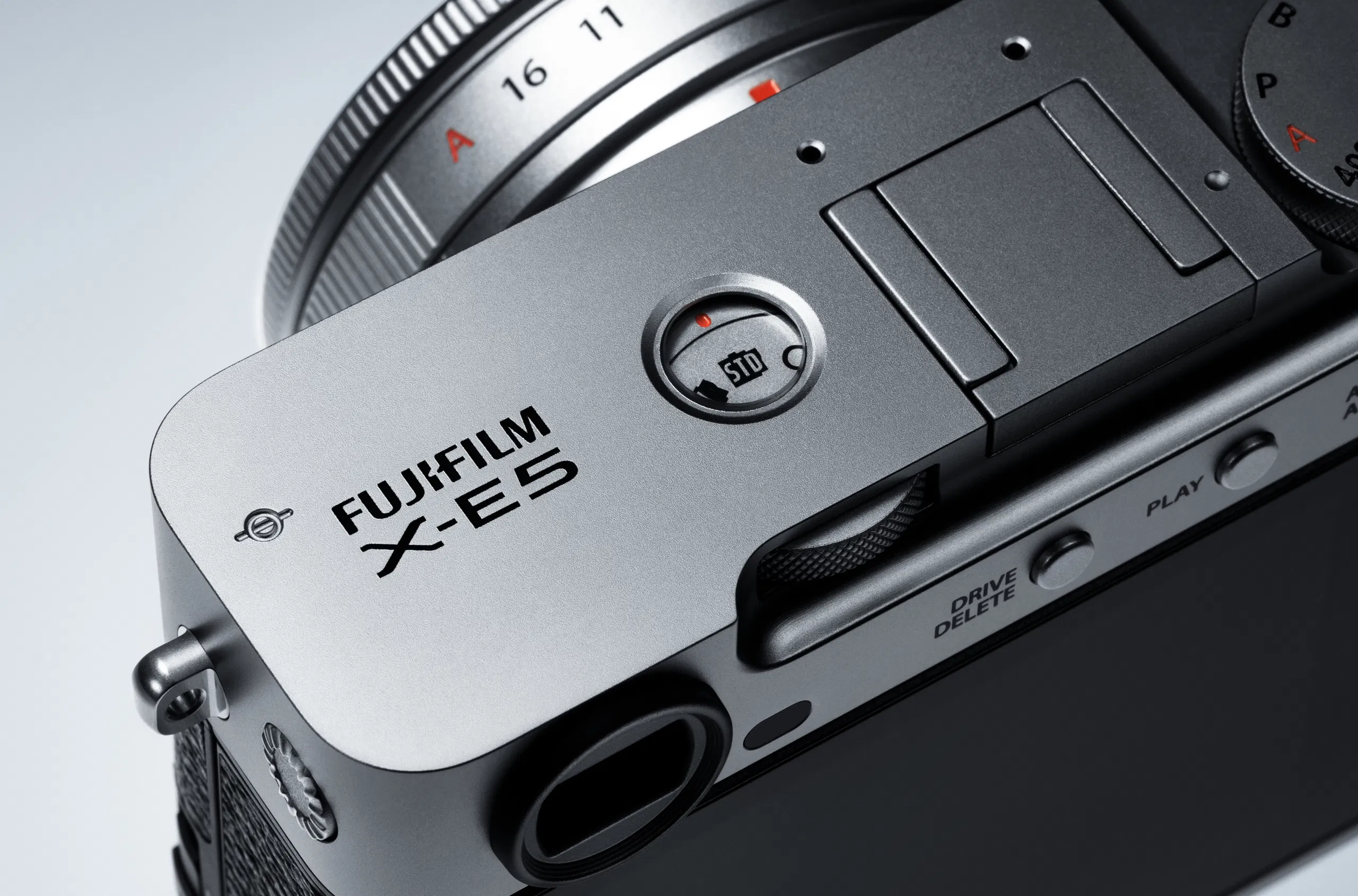
There's just one sensor option: the X-E5 uses a 40.2MP X-Trans CMOS 5 HR APS-C sensor. It's the fifth X-E model, and it adds full 5-axis in-body stabilization rated at up to 7 stops.
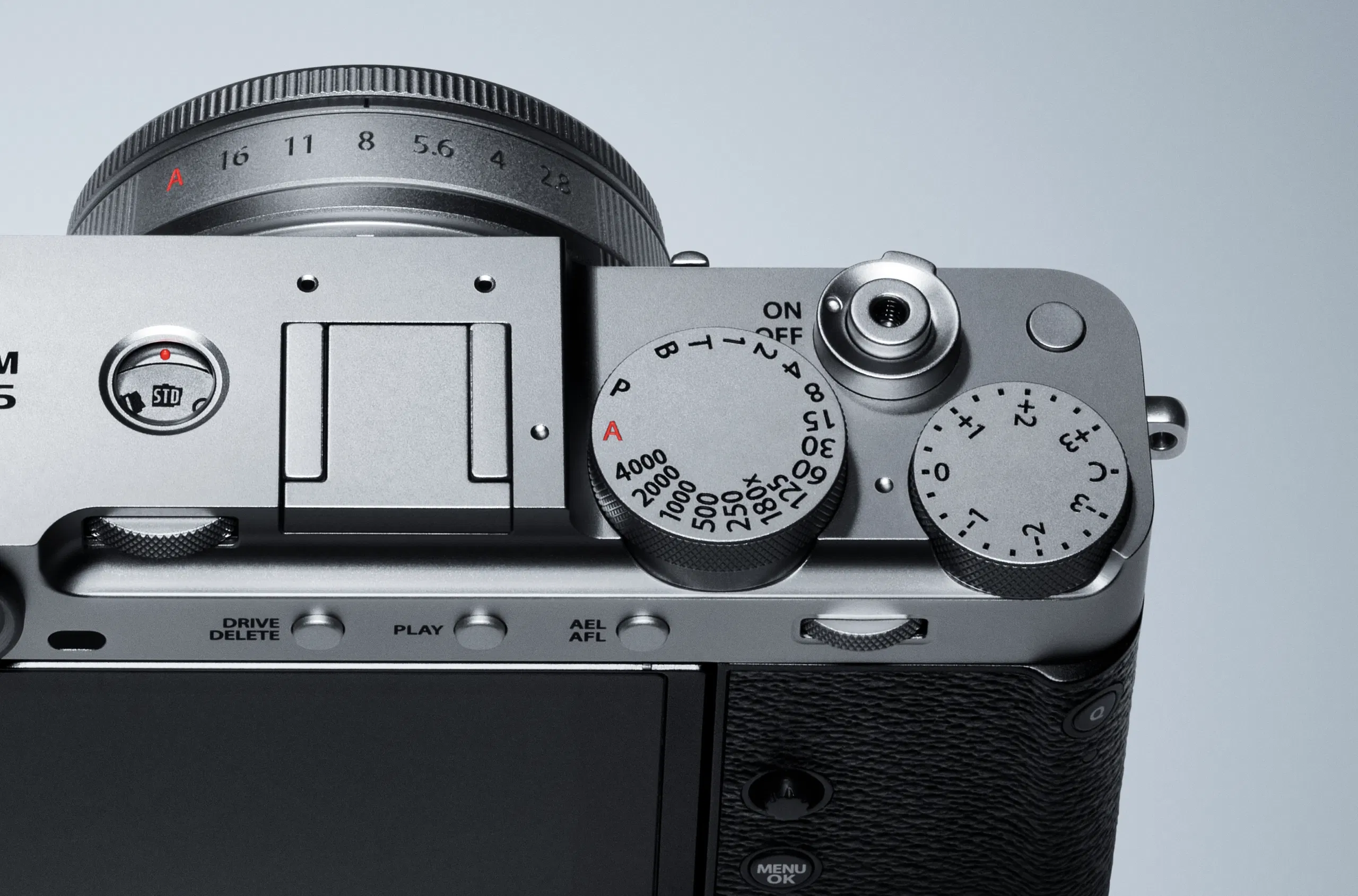
Its signature feature is the dedicated Film Simulation dial on the top plate. The X-E5 offers 20 Film Simulations, including Provia, Velvia and Classic Negative, and the dial can also hold custom recipes. In practice, the JPEGs come out with a finished look straight away, with no grading session needed.
Video is more capable than the compact body suggests. It records 6.2K at 30p, 4K at 60p in 10-bit 4:2:2, and Full HD at up to 240fps, with F-Log and F-Log2. TechRadar did record overheating after about 14.5 minutes of 4K/60, so it's not a long-take video machine.
Fujifilm X-E5 pros and cons
Pros
- Superior image quality: a large 40.2MP APS-C sensor gives far better detail, dynamic range and low-light results than any small-sensor action camera.
- Film Simulations: a finished aesthetic in camera, controlled from a physical dial.
- Strong IBIS (up to 7 stops) for handheld shooting at slow shutter speeds.
- Compact rangefinder-style body at about 445 g, with access to the whole X-mount lens system.
Cons
- Expensive: $1,699 body only, or $1,899 with the XF23mm f/2.8 lens.
- No weather sealing: keep it out of rain and away from water.
- Fixed field of view: you only get what the lens sees. If something happens behind you, you miss it.
- Can overheat during long 4K/60 recordings.
Real-World Scenarios: Which Camera Fits You?
The solo content creator. If you film alone, the AKASO 360 works as your digital camera operator. Put it on the invisible stick, walk, talk or ride, and frame the shot later with tracking. The X-E5 shoots great video, but you have to stay in focus and in frame, which takes more setup when nobody is behind the camera.
The travel enthusiast. For city walks, cafés and landscapes, the X-E5 is the camera I'd rather carry. Its images look like they belong in a magazine. If your trip involves kayaking near spray, skiing or scootering through chaotic streets, the AKASO 360 is more practical. It captures the feel of the whole environment and not just one slice of it.
The aspiring photographer. If you want to learn depth of field, bokeh and RAW editing, the AKASO 360 will eventually feel like a utility tool. The X-E5 is a creative instrument that grows with you as you add lenses.
Workflow and sharing. With the X-E5, you can shoot a photo, transfer it to your phone with the Film Simulation already applied, and post it within minutes. With the AKASO 360, you transfer a large 360 file, reframe it in the app, export it and then share it. That makes the AKASO better for curated edits, and the Fujifilm better for in-the-moment posting.
Battery and storage. 5.7K 360 video is demanding. AKASO rates the battery at about 60 minutes at 5.7K/30, while TechRadar and Visordown measured roughly 50–55 minutes. For a full day of riding, plan on swapping batteries, which is why the two-battery combo makes sense. The X-E5 is rated at about 400 shots per charge. 360 files also eat storage fast, so bring a large microSD card (the AKASO supports up to 512GB) and plan your offloads.
Alternatives Worth Considering
| Camera | Best for | How it compares |
|---|---|---|
| AKASO 360 | Budget 360 action and moto footage | Lowest price of the group, strong stabilization, no user-replaceable lenses |
| Insta360 X5 | Serious 360 creators | Better image quality and replaceable lens glass, at a higher price |
| Fujifilm X-E5 | Stills, street and travel photography | Far better image quality, but no 360 capture and no weather sealing |
| Fujifilm X100VI | Fixed-lens street shooters | Similar look and feel in a fixed-lens package |
Buying Checklist
- [ ] Do you mainly shoot action, rides or solo vlogs? Choose the 360.
- [ ] Do you care most about photos, color and prints? Choose the X-E5.
- [ ] Will you have time to reframe 360 footage before sharing?
- [ ] Do you need waterproofing? Neither is submersible without a housing.
- [ ] Is your budget closer to $200–$300 or closer to $1,700+?
- [ ] For motorcycle use, does the bundle include mounts and a spare battery? The AKASO 360 Motorcycle Combo includes an invisible selfie stick and two batteries.
Verdict
Which camera is better depends on where you want the viewer's eye to go. If you want to disappear into the background and let the viewer explore a whole scene, especially from a bike, a board or a selfie stick, the AKASO 360 is the better and far cheaper choice. It isn't waterproof or flawless in low light, but its stabilization, horizon lock and invisible-stick shots punch well above its price.
If you want to create a specific, deliberate image, the Fujifilm X-E5 wins. Its 40.2MP sensor, 7-stop IBIS and Film Simulations give results a small-sensor action camera can't match. In the end, the AKASO captures the where and the what, while the Fujifilm captures the how and the why.
If hands-free action footage is what you're after, check the current price of the AKASO 360 Motorcycle Combo.
Some links in this article are affiliate links — see our affiliate disclosure. Want to know how we pick products? Read more about TwizzyMedia.
Frequently asked questions
What sensor does the Fujifilm X-E5 use?
A single configuration: a 40.2MP APS-C X-Trans CMOS 5 HR sensor. There is no 26.1MP version.
Is the AKASO 360 waterproof?
No. AKASO describes it as weatherproof, and reviewers treat it as splash-resistant for rain. It is not meant to be submerged without a housing.
How long does the AKASO 360 battery last?
AKASO rates its 1350mAh battery at about 60 minutes of 5.7K/30fps recording, and reviewers measured roughly 50–55 minutes. The Motorcycle Combo includes two batteries.
Does the Fujifilm X-E5 have in-body image stabilization?
Yes. It's the first X-E model with 5-axis IBIS, rated at up to 7 stops (CIPA).
What video resolutions do the two cameras record?
The AKASO 360 records 360° video at up to 5.7K/30fps or 4K/60fps. The X-E5 records up to 6.2K/30p, 4K/60p in 10-bit 4:2:2, and 1080p at up to 240fps.
How much do they cost?
The AKASO 360 Standard Combo launched at $199.99, and bundles such as the Motorcycle Combo cost more. The Fujifilm X-E5 is $1,699 body only or $1,899 with the XF23mm f/2.8 lens.