


Is the Birdfy Bath Pro Still Good in 2026? Long-Term Review
My long-term Birdfy Bath Pro review: dual-lens 1080p + 2K camera, solar fountain, free lifetime Bird ID, setup tips, seasonal advice, pros and cons.
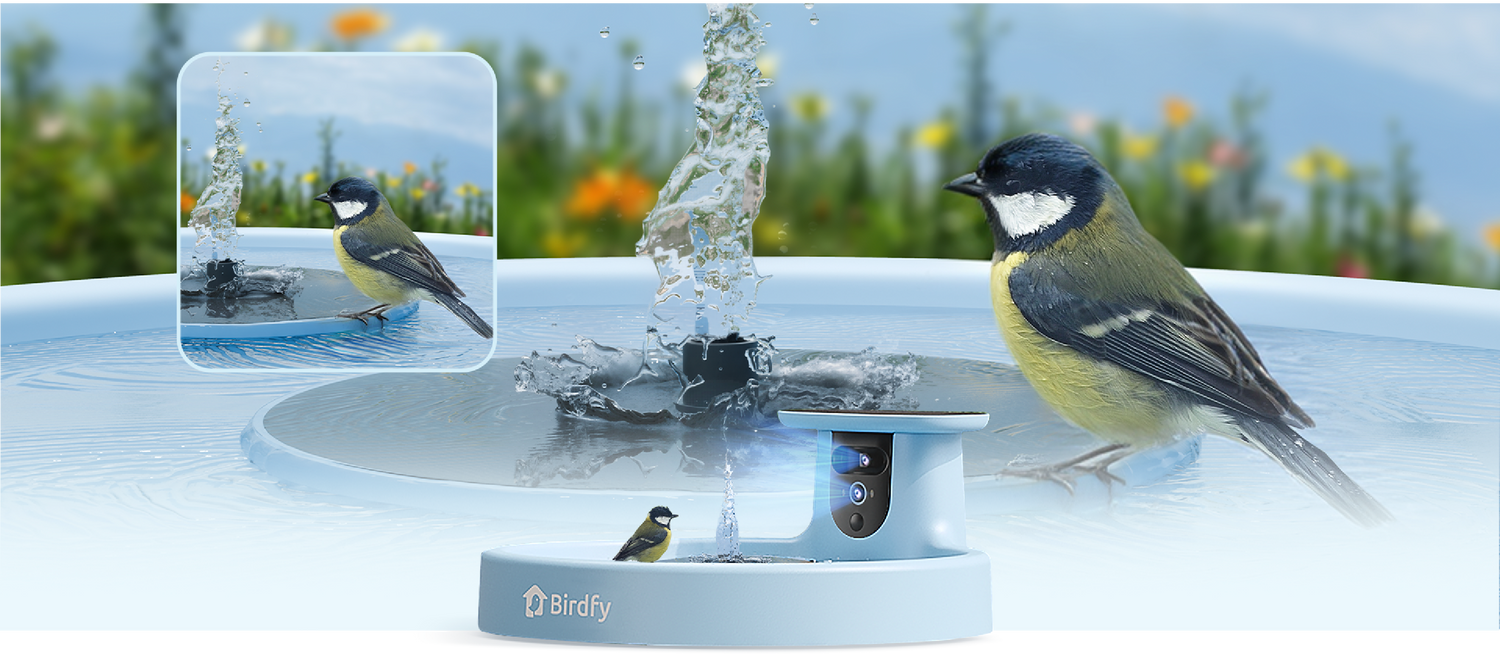
When I first set up the Birdfy Bath Pro in my backyard, it felt like a bit of an indulgence. I already had a couple of static bird baths and a feeder camera, so I wondered whether combining a bath and a camera was really necessary. Nearly a year of seasons later (summer heat, a damp spring and a cold January), my perspective has shifted. The question for 2026 isn't just whether it works, but whether it holds up as a long-term buy for serious backyard birders.
Quick take: The Birdfy Bath Pro pairs a 1080p wide-angle lens with a 2K auto-tracking portrait lens, a solar-powered fountain and free lifetime AI Bird ID. It's the most entertaining bird cam I own, but it needs fresh water every couple of days, the fountain only runs in direct sun, and auto tracking is hit and miss. Check the current price of the Birdfy Bird Bath with Camera.
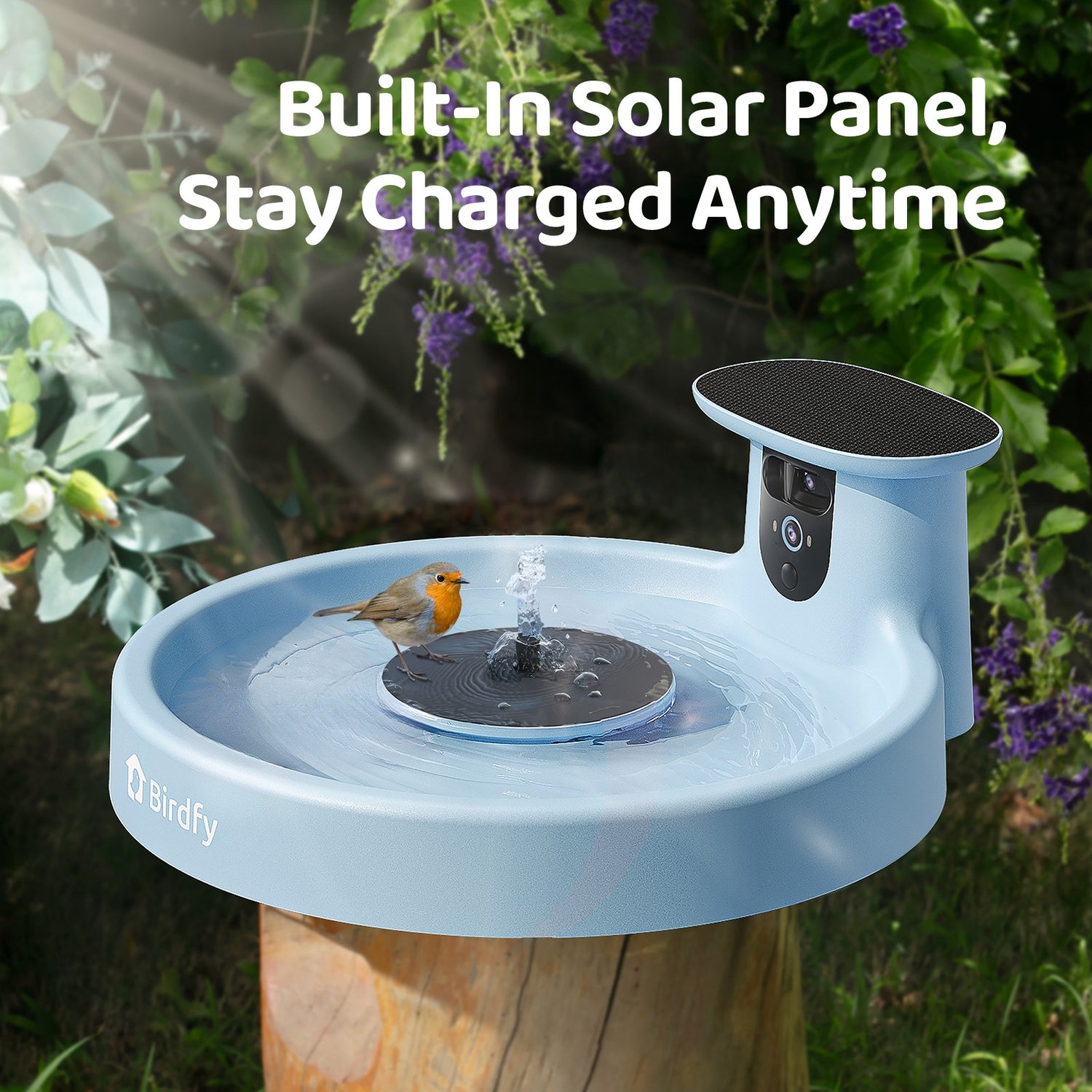
Birdfy Bath Pro specs at a glance
I've corrected my own early notes here against Birdfy's official spec sheet. One thing worth clearing up: it isn't a "1080p camera". It has two lenses, and only the wide one is 1080p.
| Spec | Birdfy Bath Pro |
|---|---|
| Wide-angle lens | 2MP, 1920×1080 at 20fps (1280×720 in high-frame-rate mode) |
| Portrait lens | 3MP, 2K (1536×1536 at 20fps), auto tracking; 768×768 at 100fps in high-frame-rate mode |
| Field of view | Not published by Birdfy |
| Motion detection | PIR sensor with instant alerts |
| Night vision | White light |
| Battery | 9,000mAh lithium-ion, DC 5V/1.5A charging |
| Solar | 1.9W panel built into the camera; separate 1.65W panel for the fountain |
| Basin | 16 in (41 cm) wide, 1.65 in (4.2 cm) deep, 0.9 gal (3.5 L) |
| Wi-Fi | 2.4GHz only |
| Storage | Cloud; no microSD replay |
| Weather rating | IP66 |
| Operating temp | Bath 32–122°F (0–50°C); camera 14–122°F (−10–50°C) |
| Weight | 3.5 lb (1.58 kg) bath only; 5.7 lb with stand |
| AI Bird ID | Free for life, 6,000+ species, no subscription required |
My journey with the Birdfy Bath Pro
I find a weird sort of peace in watching local wildlife, but my old baths were high-maintenance and low-reward for visibility. I'd see a splash from the kitchen window, and by the time I grabbed binoculars the visitor was gone. I wanted close-ups of a Goldfinch ruffling its feathers or a Blue Jay taking a dramatic plunge.
What I learned is that a camera bath has different challenges from a feeder cam. Water reflects light, gets murky and creates motion that confuses software. Setup itself was simple, since it's mostly one piece, but positioning took trial and error. I first put it under an oak for shade, then realised falling leaves and droppings in water need a much faster cleaning cadence than seed. I moved it three times before settling on a spot with enough direct sun for the solar panels but enough shelter that the water didn't evaporate by mid-afternoon. It isn't a set-and-forget gadget.
Design and build quality after a year outdoors
Earlier smart bird products often felt toy-like, so I was pleasantly surprised here. The basin is ABS plastic, and even after algae growth in a humid July, a soft brush brought it back without staining. That smooth surface is far easier to keep hygienic than concrete or porous stone.
The camera housing got most of my scrutiny, because it's splashed constantly. It's rated IP66, and after a full cycle of seasons I haven't seen condensation inside the lens cover. The real issue is droplets on the outside: wind-blown rain and enthusiastic bathers smear the view, and reviewers report the same. I wipe the lens with a microfiber cloth weekly. In bright, direct sun I also get some flare and washed-out footage, which other reviewers have noticed too.
The fountain: the real bird magnet
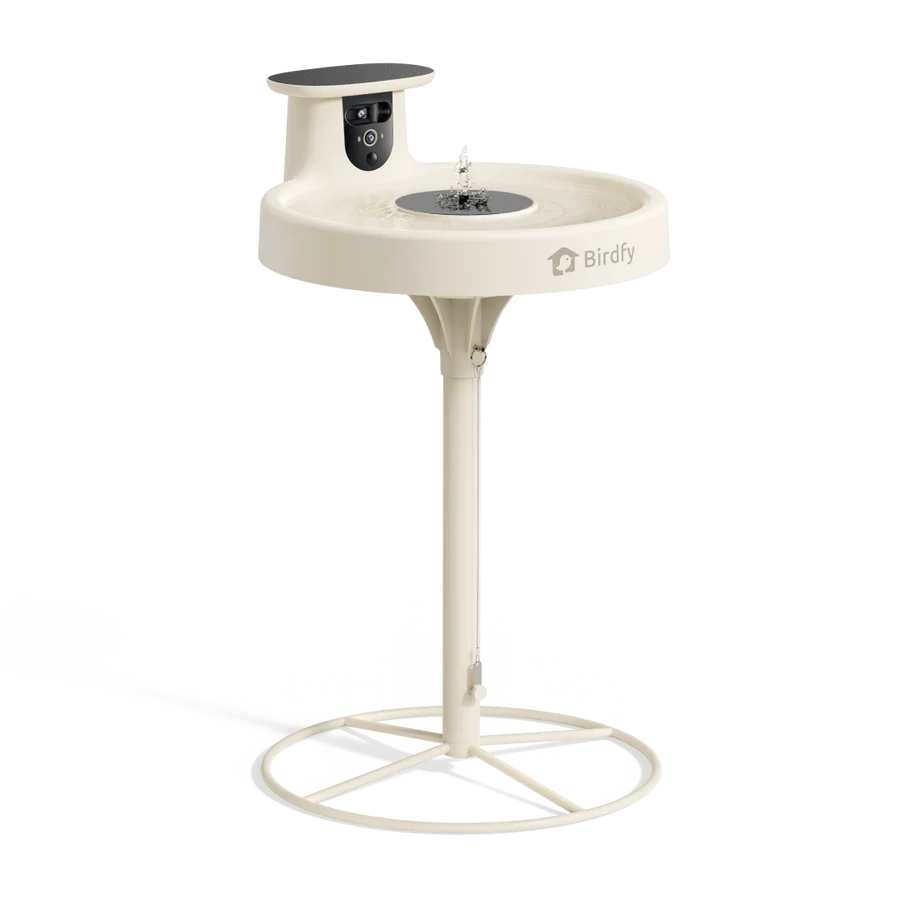
The feature that drew the widest variety of species wasn't the camera but the fountain. Moving water and its trickling sound work like a dinner bell. Species I rarely saw at my static bath, like Cedar Waxwings and House Finches, began showing up within days. The box includes several interchangeable nozzles, so you can choose a gentle bubble or a taller spray.
Here I need to correct my own early assumption. I originally blamed weak cloudy-day performance on the pump draining the camera battery. It doesn't: the fountain runs on its own 1.65W solar panel, separate from the camera's 9,000mAh battery, and it only runs in direct sunlight. On overcast days it simply stops, and the birds still use the bath. Owners and reviewers consistently mention this. It's the one thing I wish Birdfy would change, perhaps with a small fountain battery.
AI performance and connectivity in 2026
The smart side is where Birdfy tries to stand out. Bird ID is included free for life and covers 6,000+ species with no subscription. Notifications have felt quicker over the months as firmware updates arrived, and ID is right more often than wrong, though it still mislabels birds sometimes, especially at awkward angles.
The 2K portrait lens is the star. It pans to follow birds and frames feather-level close-ups, but tracking is genuinely hit and miss. Rippling water seems to confuse it, and Birdfy has said it's working on the algorithm. Its 100fps high-frame-rate mode is how I get those slow-motion clips of a bird shaking water off its wings.
Motion is triggered by a PIR sensor, so false alerts happen. I've had plenty of "visitor" notifications that were a dragonfly, swaying plants or a squirrel searching for food. Labelling squirrels, raccoons and other non-bird visitors, plus male/female and juvenile/adult detail, is part of the optional Plus and Pro memberships rather than the free tier.
For connectivity, it's 2.4GHz Wi-Fi only. I installed a simple outdoor Wi-Fi extender so the live stream doesn't stutter when something rare arrives. There's no microSD replay, so everything goes through the cloud.
App and community features
The app's social side has become one of my favourite parts. I share HD clips with family, browse Highlights and monthly recaps, and dip into community highlights from other owners. You can add multiple guest accounts per device, which helps if the whole family wants alerts. Live view, manual recording and two-way audio round it out.
If you own an AI Lifetime Free device, Birdfy is also offering 3 free months of Pro between Nov 1, 2026 and Apr 30, 2027, a low-risk way to try the extra detail.
Long-term maintenance and reliability
Unsurprisingly, water is the main chore. The basin only holds about 1.65 in (4.2 cm) of water, so it gets dirty fast. If you don't refresh it every two to three days, the pump struggles with debris and grime obscures the view. The fountain's filter cotton is small and clogs with seeds or downy feathers, so I rinse it during every refill (spares come in the box).
One wobble: the camera went offline once after a brutal thunderstorm. A power cycle brought it back, and it hasn't happened since.
My two-minute refill routine
- Tip out the old water and wipe the basin with a soft brush.
- Rinse the fountain filter cotton and check the nozzle for debris.
- Wipe the camera lens with a microfiber cloth.
- Refill with fresh water up to the basin's shallow depth.
- Check the app's battery level, especially in winter.
Then vs now
| Feature | Day one | After a year |
|---|---|---|
| AI identification | Hit or miss with small birds | More reliable, still occasional mislabels |
| Battery | Seemed endless with solar | Needs watching in dark winter months |
| Fountain | Quiet and lively | Only runs in direct sun; filter needs rinsing |
| Image quality | Impressive 2K close-ups | Still sharp if the lens is wiped weekly |
| Bird attraction | Slow first few days | The fountain is a big draw in warm months |
Pros and cons
Pros
- The solar fountain attracts birds that ignore static baths.
- Two lenses: a 1080p wide view of the whole bath plus a 2K auto-tracking portrait lens.
- Free lifetime Bird ID for 6,000+ species, no subscription needed.
- Solid IP66 build that has resisted UV, staining and cold.
- Built-in solar charging means I've rarely needed a manual USB charge.
Cons
- Needs fresh water every two to three days; droppings and algae build quickly.
- Fountain stops without direct sunlight.
- Auto tracking is inconsistent, especially on rippling water.
- False alerts from insects and plants; no local microSD replay.
- Heavier and awkward to move once filled.
Seasonal advice
Spring and summer: Peak season. Refill more often in heat and place it where the fountain gets several hours of direct sun.
Autumn: Watch for leaf litter clogging the filter.
Winter: Birdfy rates the bath for 32°F (0°C) and up, while the camera handles down to 14°F (−10°C). In my sub-freezing weeks I emptied the basin rather than let it freeze, and once in mid-January I brought the camera inside for a full charge over USB. Lithium batteries don't love cold, and short winter days give the panel less to work with. Visits drop off in winter for many owners anyway.
Buying checklist
- [ ] Can you refresh the water every two to three days?
- [ ] Does your spot get several hours of direct sun for the fountain?
- [ ] Is there a strong 2.4GHz Wi-Fi signal where it will sit?
- [ ] Is there natural cover about 10–15 feet away for birds to retreat to?
- [ ] Are you OK with cloud-only storage?
- [ ] Do you want the stand version, or do you have a pedestal or table?
I also add a few flat stones to the shallow basin, which helped smaller birds step in confidently. If that list suits you, see the Birdfy Bird Bath with Camera on Amazon.
How it compares
| Option | What you get | Best for |
|---|---|---|
| Birdfy Bath Pro | Bath + fountain + 1080p wide and 2K portrait lenses, free Bird ID | Watching bathing and drinking up close |
| Birdfy feeder camera (e.g. Feeder 2 Duo) | Seed feeder with a 2K portrait camera | More visits overall; reviewers say feeders draw more birds |
| Bird Buddy smart feeder | Feeder camera with a polished app | People who value app experience |
| Plain solar fountain bath | Moving water, no camera | Attracting birds on a budget |
If you already own a feeder cam, the Bath Pro complements it rather than replacing it. Several reviewers found feeders drew more visitors than baths.
The 2026 verdict
After a year, the Birdfy Bath Pro has changed how I use my backyard. I've watched a Wood Thrush take a three-minute bath and a pair of Mourning Doves meet at the rim nearly every evening. Those moments make the maintenance and occasional false alert worth it.
It isn't flawless. The fountain needs sun, tracking needs work, and it demands more effort than a feeder. But with free lifetime Bird ID, a genuinely useful 2K portrait lens and a fountain that pulls in new species, it's still one of the best ways to watch birds bathe and drink in 2026. If you're willing to embrace the water routine, grab the Birdfy Bird Bath with Camera here.
Some links in this article are affiliate links — see our affiliate disclosure. Want to know how we pick products? Read more about TwizzyMedia.
Frequently asked questions
What resolution is the Birdfy Bath Pro camera?
It has two lenses: a 2MP wide-angle lens recording 1080p (1920×1080) and a 3MP portrait lens recording 2K (1536×1536) with auto tracking. The portrait lens also has a 768×768, 100fps high-frame-rate mode.
Does the Birdfy Bath Pro need a subscription for bird ID?
No. The lifetime version includes free AI Bird ID for 6,000+ species. Optional Plus and Pro memberships add extras such as male/female and juvenile/adult detail and non-bird visitor recognition.
Does the fountain run on cloudy days?
No. The fountain has its own 1.65W solar panel and runs only in direct sunlight. The camera runs on a separate 9,000mAh battery charged by a 1.9W panel.
What Wi-Fi does the Birdfy Bath Pro need?
It connects to 2.4GHz Wi-Fi only. A strong signal at the bath's location matters for live view and clip uploads.
Does it have a microSD card slot?
Birdfy lists microSD replay as not available, so clips are viewed through cloud storage in the Birdfy app.
Can I use the Birdfy Bath Pro in winter?
Birdfy rates the bath for 32°F (0°C) and above and the camera for 14°F (−10°C) and above, so empty the basin before hard freezes. Battery life also drops in cold, short days.